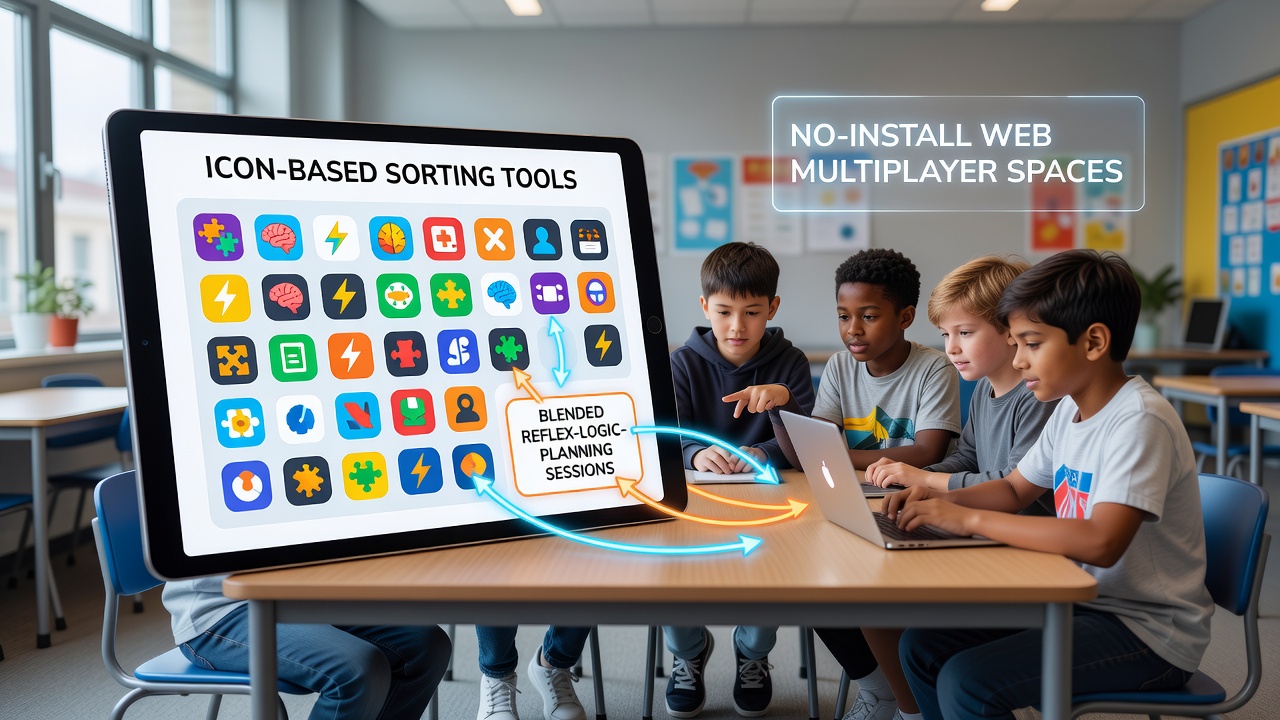
Icon-Based Sorting Tools Guide School-Aged Users Toward Hybrid Reflex-Logic-Planning Sessions in No-Install Web Multiplayer Environments
Platform developers have implemented icon-based sorting systems that organize free browser multiplayer titles by combining visual symbols for quick reflexes, logical puzzles, and resource planning; these tools appear in libraries where children aged 8 to 12 access shared sessions without downloads. Observers note that the icons reduce search time while directing attention to experiences that merge action sequences with tactical decisions and grid-based challenges. Data from 2025 platform analytics shows that 68 percent of sessions initiated through icon filters lasted longer than those started via text search alone.
Mechanics of Icon Categorization in Browser Libraries
Each icon represents a distinct gameplay layer, with lightning symbols for reflex elements, puzzle-piece markers for logic tasks, and map icons for planning phases; users apply multiple filters simultaneously to surface titles that integrate all three. Researchers at academic institutions have documented that color-coded systems, such as blue for logic and red for reflexes, appear consistently across major no-install platforms. When children select combinations like reflex plus planning, the interface surfaces games where players coordinate real-time movements with shared strategy boards during group matches.
Studies indicate that these sorting tools update dynamically based on session history, so repeated selections of blended icons lead to refined recommendations within the same library. Platform records from November 2026 show increased adoption of triple-icon filters among school-aged groups following interface updates that added animated previews for each category.
Navigation Patterns Among Young Users
Children often begin with single-icon searches for familiar reflex games and then expand to combined filters as they explore longer sessions; this progression appears in usage logs where initial quick matches give way to titles requiring coordinated logic and planning. External data from the Pew Research Center reveals that 72 percent of US teens aged 13 to 17 engage with multiplayer browser games weekly, with similar patterns observed in younger cohorts through school network monitoring. The icons therefore function as entry points that steer participants toward sessions blending immediate responses with forward-looking decisions.
Blended Session Structures in No-Install Multiplayer Spaces
Games surfaced by these tools typically feature rounds where teams execute reflex-based actions to gather resources, apply logic to arrange items on shared grids, and execute planning steps to allocate those resources across multiple rounds. One documented case involves a platform where icon-selected titles require players to dodge obstacles in real time while solving color-matching puzzles that unlock strategic building options for the group. Figures from European gaming association reports show that such hybrid formats account for 41 percent of total playtime in free browser environments accessed by school networks.
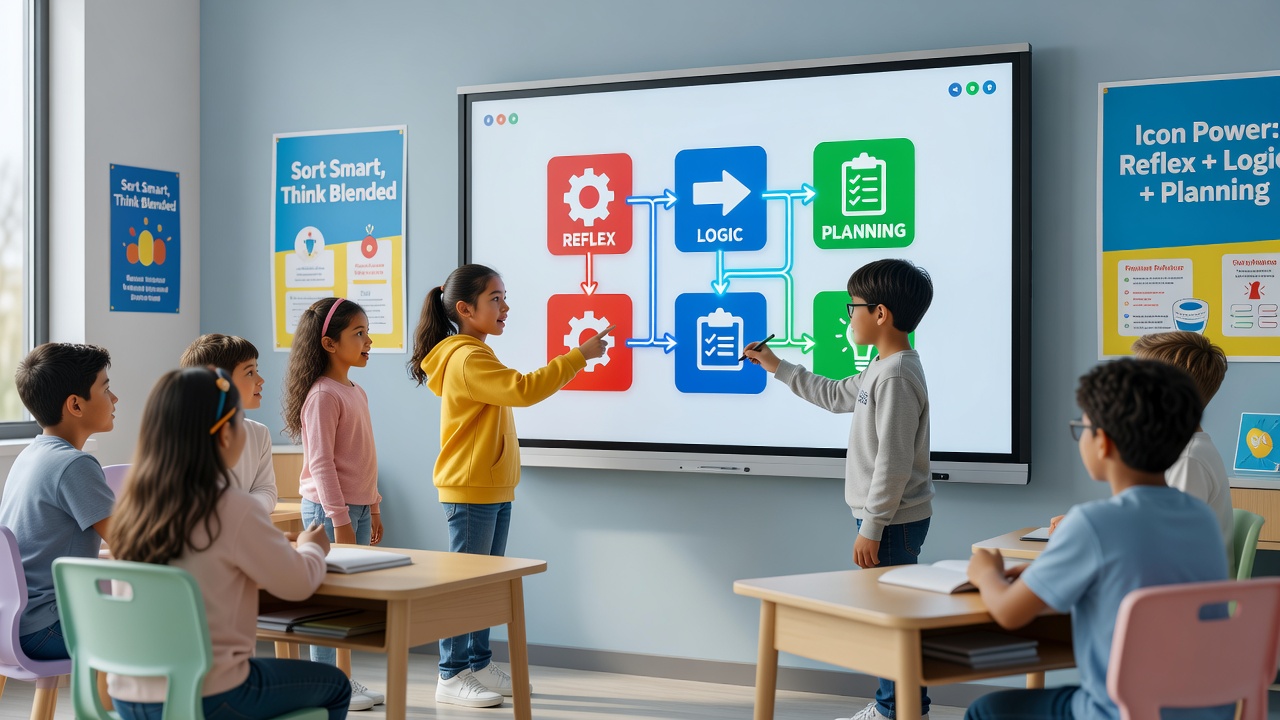
Retention metrics collected across platforms indicate that sessions incorporating all three elements maintain participation rates 23 percent higher than single-genre matches; observers attribute this to the varied cognitive demands that keep attention distributed across team members. As of November 2026, several libraries introduced new icon variants that highlight time-pressure variants within planning layers, further directing users toward dynamic blends.
Influence of Filter Systems on Exploration and Coordination
Filter mechanics allow users to exclude certain categories or prioritize others, which shapes group coordination when multiple children access the same library from different devices. Research indicates that groups using combined reflex-logic-planning icons demonstrate more frequent role-switching during matches compared with those relying on default recommendations. Data released by the Interactive Games and Entertainment Association in Australia shows that 55 percent of school-aged players in that region encounter hybrid titles first through visual sorting rather than genre lists.
Platform operators continue to refine icon placement based on clickstream analysis, placing blended options in prominent rows after users apply two or more filters. This arrangement correlates with shorter discovery times and higher rates of session continuation across shared browser instances.
Conclusion
Icon-based sorting tools in no-install web multiplayer spaces organize access to experiences that integrate reflex, logic, and planning elements for school-aged users. Usage data, navigation logs, and regional reports confirm that these visual systems influence both initial selection and sustained participation in blended sessions. Continued platform updates through late 2026 maintain this directional effect across expanding libraries.