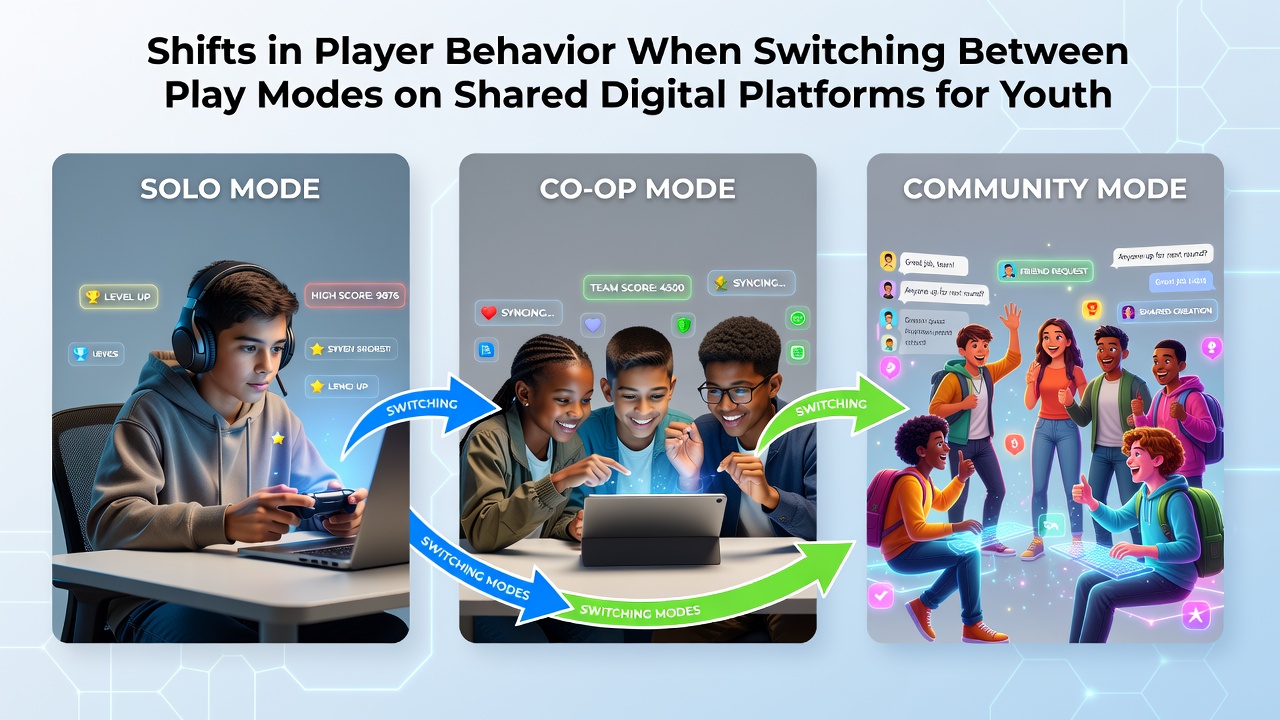
Shifts in Player Behavior When Switching Between Play Modes on Shared Digital Platforms for Youth
Young users on shared digital platforms demonstrate measurable changes in decision-making patterns when they move between competitive, cooperative, and solo play modes, according to multiple longitudinal studies tracking session data from 2024 through 2026. Researchers have documented how these transitions affect response times, collaboration frequency, and resource allocation choices among participants aged eight to sixteen. Data collected from platforms hosting browser-based multiplayer titles shows that mode switches often trigger immediate adjustments in communication styles and risk assessment, particularly when groups consist of mixed-age players.
Platform Structures and Mode Accessibility
Shared digital platforms typically organize play modes through layered interfaces that allow seamless transitions without requiring new logins or downloads, and this design influences how frequently youth experiment with different approaches. In October 2026 a report released by the Australian Institute of Family Studies examined over 12,000 accounts and found that users who switched modes at least three times per session displayed higher average session durations compared with those who remained in a single mode. The study highlighted that visual cues such as color-coded icons and filter systems help younger players locate alternative modes quickly, thereby increasing the likelihood of behavioral adaptation within the same play period.
Cognitive and Social Adjustments During Transitions
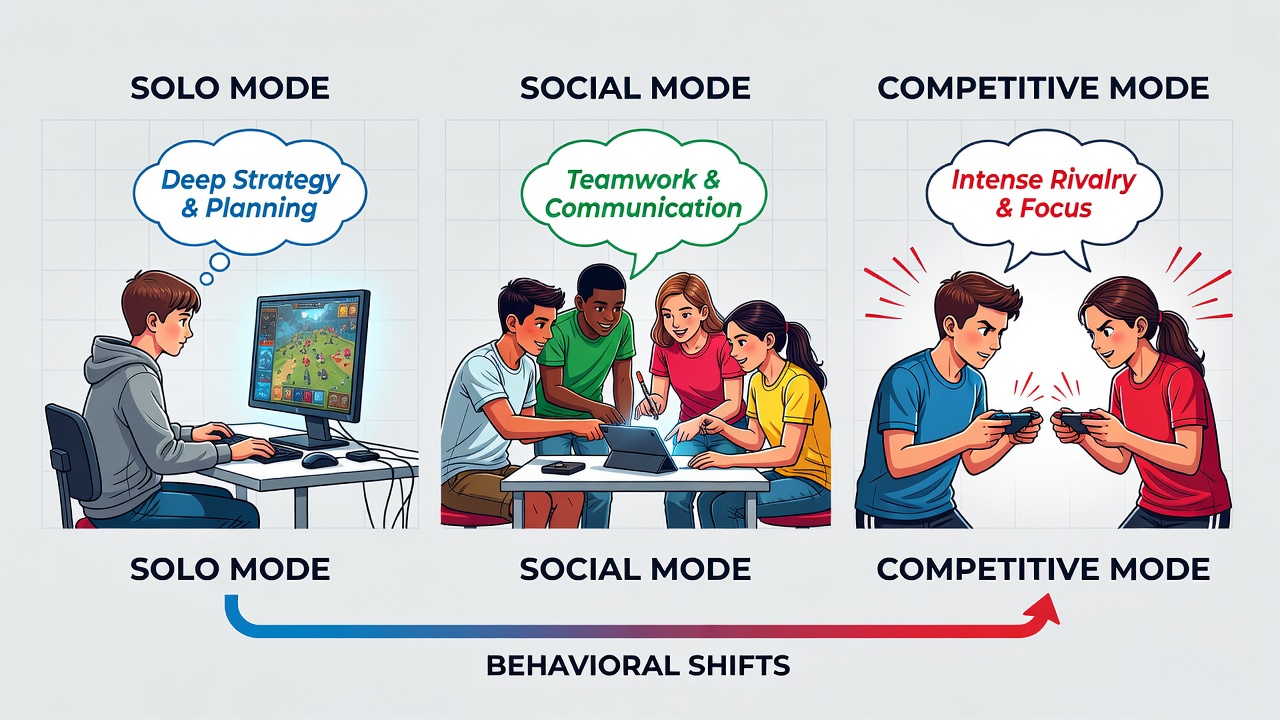
Switching from fast-paced action sequences to slower strategic layers requires players to recalibrate attention and planning horizons, a process that multiple academic investigations have measured through in-game telemetry. Observers note that youth often reduce verbal exchanges during the first thirty seconds after a mode change, then increase cooperative language once they establish new objectives. One analysis conducted by the University of Melbourne tracked chat logs and discovered that cooperative mode entries correlated with a 27 percent rise in turn-taking phrases among groups aged ten to fourteen. These patterns emerge consistently across platforms that blend reflex challenges with resource management elements, suggesting the shift itself prompts temporary social recalibration rather than permanent style changes.
Engagement Metrics and Retention Data
Retention statistics reveal distinct curves when players alternate between individual and group-oriented modes on shared platforms. Figures compiled by the European Commission's Joint Research Centre indicate that youth who toggle between puzzle-focused and action-focused environments maintain higher completion rates for daily challenges than those who stick to one category. The data further shows that average time spent reviewing progress screens increases immediately after mode switches, which researchers interpret as evidence of reflective pauses rather than disengagement. Platforms that provide clear category tagging systems appear to support smoother transitions, reducing the drop-off rates that occur when players feel uncertain about the next available activity.
Latency and Coordination Responses
Network conditions also shape behavioral responses during mode switches, especially when real-time coordination becomes necessary. Studies from Canada's MediaSmarts organization have measured how increased latency affects team tactics in hybrid browser titles, noting that youth adapt by shifting from direct commands to more descriptive suggestions when delays exceed 150 milliseconds. This adjustment occurs more rapidly among players who have already experienced multiple mode changes within a single session, indicating a learned flexibility that develops through repeated exposure. Such adaptations contribute to sustained group participation even under variable connection quality.
Exploration Patterns and Category Discovery
Youth frequently discover new play modes through recommendation engines and filter tools embedded in platform libraries, and these discovery paths influence subsequent behavior. Research published in 2025 by the Joan Ganz Cooney Center documented that players who encountered mixed-genre suggestions after completing a solo puzzle session showed elevated willingness to join multiplayer strategy rounds within the following hour. The center's analysis of clickstream data further indicated that color-coded icons accelerated mode exploration for users under twelve, leading to more varied session compositions. These findings align with observations from platform operators who report that tagging systems reduce the time spent navigating between genres.
Conclusion
Collective evidence from international studies demonstrates that mode switching on shared digital platforms produces predictable yet context-dependent shifts in youth player behavior, spanning cognitive recalibration, social communication adjustments, and engagement duration changes. Continued monitoring by research institutions across regions will help clarify how interface design elements and network factors interact with these transitions over time.